

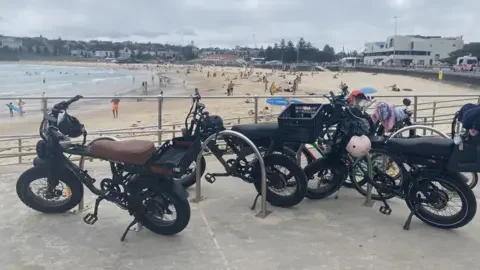
Modified e-bikes with oversized tires are moving through Sydney’s coastal suburbs at speeds that exceed legal limits for footpaths and public roads. These machines—marketed as off-road gear—are being used by teenagers and gig-economy couriers to navigate pedestrian spaces, leading to physical collisions and legal friction in high-value neighborhoods. Local residents report a disconnect between current law enforcement and the mechanical reality of these overpowered cycles.
"Teens also don't fully realise that they are at risk of criminal charges," observers noted, highlighting a gap between the perceived playfulness of the activity and the statutory weight of operating unregistered motor vehicles.
The Breakdown of Usage and Risk
The primary friction exists where high-speed machines meet slow-moving pedestrian traffic. While marketed as recreational, the bikes function as de facto unregulated mopeds.

| Operator Group | Primary Usage | Friction Point |
|---|---|---|
| Youth Operators | Stunts, social media content, transit to beaches | High-speed weaving, lack of helmets, golf course incursions. |
| Delivery Riders | Rapid food transport | Sidewalk congestion, aggressive navigation in high-density areas. |
| Modified E-Bikes | High-speed commuting | Motors exceed wattage limits, creating speeds dangerous for non-crash-rated gear. |
Illegal modifications are the core of the technical problem; bikes designed for 25km/h are being tweaked to hit much higher velocities.
Safety equipment is often ignored, with many youth operators eschewing helmets despite the increased kinetic energy of these heavy frames.
Social media acts as an incentive, with stunts on public roads and golf courses filmed for digital engagement, further aggravating local property owners.
Mechanical Displacement in Coastal Enclaves
The "fatbike" design—defined by tires four inches wide or more—was intended for snow or soft sand. In Sydney's beach suburbs, these tires now grip asphalt and concrete. The New South Wales government recently relaxed import restrictions on these devices, which has allowed a surge of unvetted hardware into the market.
Pedestrians find themselves at greater risk from these heavy frames than from traditional bicycles. The weight of the battery and the reinforced frame makes a collision more impactful. While the "war" on the streets is often framed as a nuisance issue, the legal reality is shifting toward criminal liability for riders who treat modified machines as toys.

Context: The Governance Gap
The tension in Sydney’s wealthy enclaves follows a broader trend of micromobility outstripping the slow pace of urban planning.
Regulation Lag: Government policy allowed the import of the hardware before defining the space for its use.
Enforcement Difficulties: Distinguishing between a legal e-bike and an illegally modified "fatbike" requires technical inspection that police are not always equipped to perform on the spot.
Economic Pressure: The reliance on fast delivery services keeps a constant stream of these bikes on the road, regardless of resident frustration.
The trend is expected to continue as the mechanical accessibility of these bikes meets a lack of physical barriers or strict digital-age policing.