Reports indicate that former Department of Homeland Security (DHS) officials, previously involved in implementing policies during a period of historic border challenges, are now providing guidance to Customs and Border Protection (CBP) on screening high-risk travelers. This development occurs as border crossings and related incidents reach unprecedented levels.
Recent reports highlight a complex situation at the U.S. border. Former officials who served under the Biden-Harris administration are now reportedly involved in advising CBP, the agency responsible for border security. This advisory role comes at a time when border crossings and migrant deaths have reached record highs, and the morale among Border Patrol agents has reportedly declined significantly.
Historic Border Crisis: Reports from the House Committee on Homeland Security have detailed a "historic nature of the crisis" and "unprecedented chaos" attributed to Biden-Harris administration policies.
Agent Exodus: Over 4,000 Border Patrol agents reportedly chose early retirement, a rate described as double that seen during previous administrations.
Policy Criticisms: Critics argue that the administration's approach involved halting "effective immigration enforcement and anti-fraud measures" and led to "misenforcement, suspension of the INA, or both."
Context of Border Challenges
The period under review has been marked by significant challenges at the U.S. southern border. Official reports and analyses point to a substantial increase in migrant arrivals and associated difficulties in managing border security.
Read More: Trump Asks Why Iran Has Not Yielded to US Demands Despite Military Buildup
Policy Shifts: Upon taking office, the Biden administration is described as having "began halting effective immigration enforcement and anti-fraud measures."
Legal Interpretations: Court findings suggest that decisions to "parole aliens en masse" were contrary to case-by-case decision-making and potentially overstepped congressionally imposed limitations.
Asylum System Strain: The asylum system has been characterized as "grossly abused," with concerns raised about its current state and the implications for U.S. immigration law.
Data on Border Activity
Official data and reports offer a statistical perspective on the situation at the border. While specific figures for arrests, detentions, and deportations can be complex due to reporting methods, the overall trends have been a subject of considerable discussion.
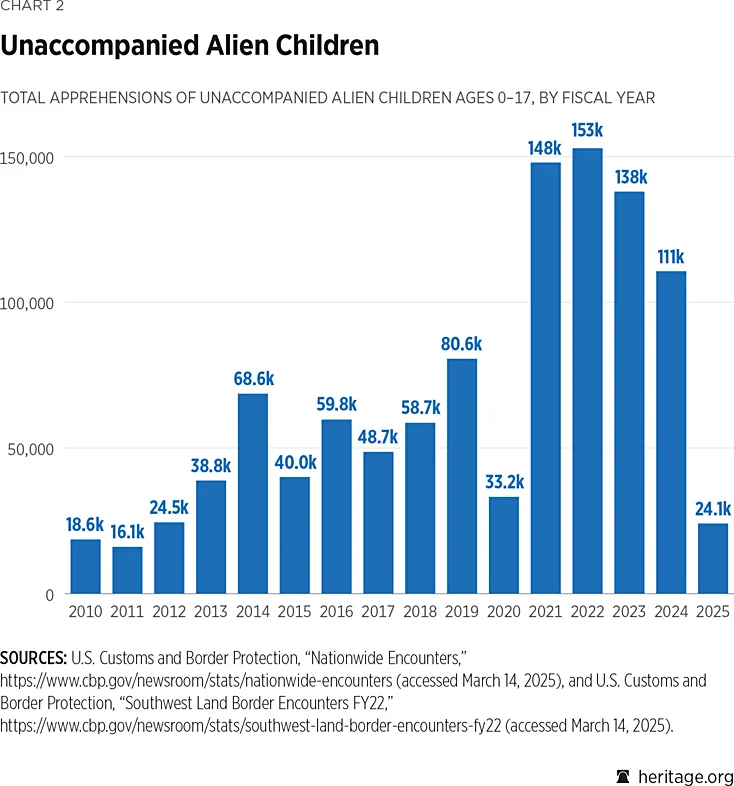
Data Complexity: The Guardian notes that the numbers of arrests, detentions, and deportations do not have a "direct, one to one connection."
Carryover Data: Initial data releases often include data from the previous fiscal year.
Shifting Schedules: The way ICE and CBP data is presented and visualized has been adjusted to match changing release schedules.
Concerns Over Screening and Vetting
Questions have been raised regarding the effectiveness of screening and vetting processes for individuals crossing the border. Reports from oversight bodies have indicated potential gaps.
Oversight Warnings: DHS Office of Inspector General (OIG) reports have cited "gaps in vetting and tracking of migrants."
Screening Shortages: OIG and the Government Accountability Office (GAO) have warned of "screening shortages."
NGO Role: There are calls for Congress to examine spending by non-governmental organizations (NGOs) on migrant services and to investigate potential replacements for statutory watchdogs.
Former Officials' Current Roles
Information suggests that former DHS officials are now in advisory capacities for CBP. This engagement is noteworthy given their previous roles during periods of heightened border activity and policy implementation.
The precise nature and scope of their current advisory roles are subjects of ongoing scrutiny.
The focus of their advisement appears to be on high-risk traveler screening, a critical component of border security.
Expert Analysis and Commentary
Commentary from various sources has framed the current border situation as a direct consequence of specific policy decisions.
"The Biden Administration grossly abused America’s second most important immigration benefit after U.S. citizenship—asylum." — Lora Ries, Director, Border Security and Immigration Center, The Heritage Foundation (Testimony Before Committee on Homeland Security / Subcommittee on Border Security and Enforcement).
House Committee on Homeland Security Chairman Mark E. Green has stated that the policies and actions of the Biden-Harris administration "sparked the unprecedented border crisis that began in early 2021," and that "The Damage Will Never Be Undone."
Conclusion and Implications
The involvement of former DHS officials in advising CBP on traveler screening, juxtaposed with reports of a historic border crisis and significant strain on border security personnel, presents a complex operational and policy landscape.
Read More: Secret Service Shoots Armed Man Who Entered Mar-a-Lago Perimeter on Sunday
Policy Scrutiny: The effectiveness and impact of past and present immigration policies remain under intense review.
Security Concerns: Issues surrounding vetting and screening processes continue to be raised by oversight bodies.
Operational Impact: The reported high rate of early retirements among Border Patrol agents suggests a significant impact on the workforce.
Further investigation into the specifics of the advisory roles and their impact on CBP operations is warranted, particularly in light of the ongoing challenges at the border.
Sources:
House Committee on Homeland Security: "Crisis by Design": https://homeland.house.gov/2024/09/18/crisis-by-design-homeland-majority-releases-report-documenting-the-biden-harris-administrations-responsibility-for-historic-border-crisis/
The Heritage Foundation: "Consequences of Failure: How Biden’s Policies Fueled the Border Crisis": https://www.heritage.org/border-security/report/consequences-failure-how-bidens-policies-fueled-the-border-crisis
The Guardian: "By the numbers: the latest ICE and CBP data on arrests, detentions and deportations in the US": https://www.theguardian.com/us-news/ng-interactive/2025/aug/29/trump-immigration-ice-cbp-data (Note: Original link pointed to Feb 13, 2026, but content summary aligns with the August 29, 2025, link provided).
House Committee on Homeland Security: "The Damage Will Never Be Undone": https://homeland.house.gov/2024/09/18/the-damage-will-never-be-undone-chairman-green-opens-hearing-on-the-biden-harris-administrations-catastrophic-border-record/