DESERTED THOROUGHFARES AND HOSPITALITY WOES MARK THE EMIRATE
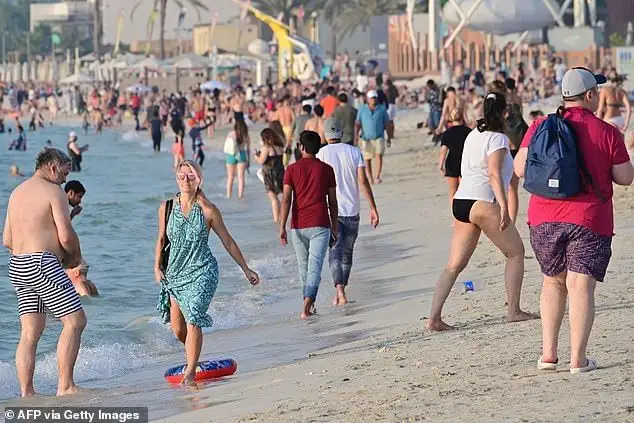
Hotel occupancy rates in Dubai have plunged to 15-20% of typical levels for this period, a stark indicator of the impact of escalated tensions in the Middle East. Business closures and staff reductions are becoming a grim reality for hospitality operators. One owner of a hospitality group reported being forced to either lay off 30% of staff or implement wage cuts to sustain operations, describing the situation as "brutal." Taxi drivers also voice intentions to seek employment elsewhere. The perception is spreading that "Dubai is finished," according to local accounts, with previously bustling beaches and tourist spots now eerily quiet. ==

Explosions and drone activity linked to Iranian actions have directly impacted the city. Debris from drones has damaged buildings in the financial district, and an attack on the Fairmont hotel on the Palm Jumeirah has been reported. The international airport has also sustained damage, with drone activity creating significant smoke plumes near its vicinity. These incidents, occurring roughly two weeks after the onset of hostilities, have instilled a sense of insecurity, leading to an exodus of residents and visitors. ==
Read More: Goldman Sachs predicts 15 million US jobs lost to AI by 2036

While some expatriates, like Petra Ecclestone, have expressed gratitude for perceived safety measures, the broader narrative points to widespread fear and uncertainty. The conflict has eroded Dubai's image as a bastion of luxury and security. ==

The emirate's economic model, heavily reliant on tourism and international business rather than oil reserves, faces a significant challenge. ==
CONTEXTUALIZING THE SHIFT
The current climate in Dubai stands in sharp contrast to its established reputation. The city, once synonymous with opulence and a secure environment for international visitors and expatriates, now grapples with the direct consequences of regional warfare. This downturn has particularly affected sectors reliant on foreign investment and tourism, sectors that form a significant pillar of Dubai's economy. Unlike some neighboring Gulf states, Dubai lacks substantial oil wealth to cushion such economic shocks. The impact is felt across various strata of the population, from business owners to service workers, many of whom are economic migrants with limited options for departure.
Read More: Lee Andrews Missing in Dubai; Wife Fears Kidnapping
A notable historical reference point, though distinct in its origins, is the existence of an actual "ghost town" near Al Madam. This abandoned settlement, with its own unexplained history, now serves as an unrelated echo of emptiness in a landscape typically associated with rapid development and vibrant activity. The current situation in Dubai, however, is a direct consequence of geopolitical events and their immediate fallout.