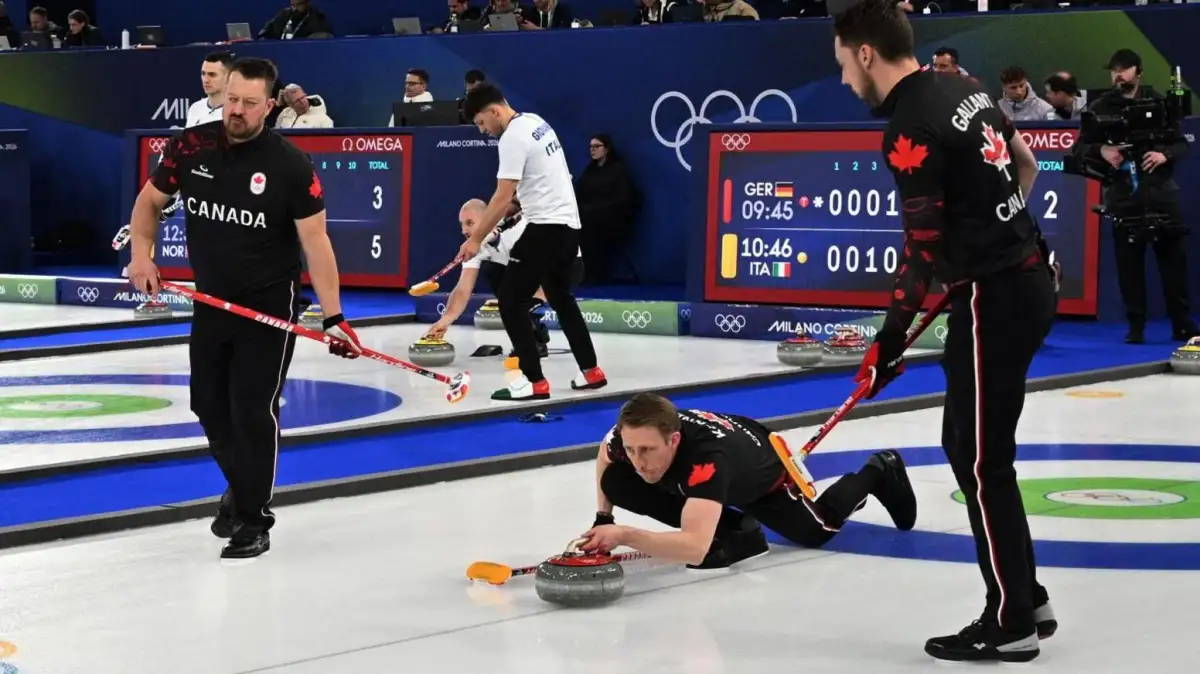
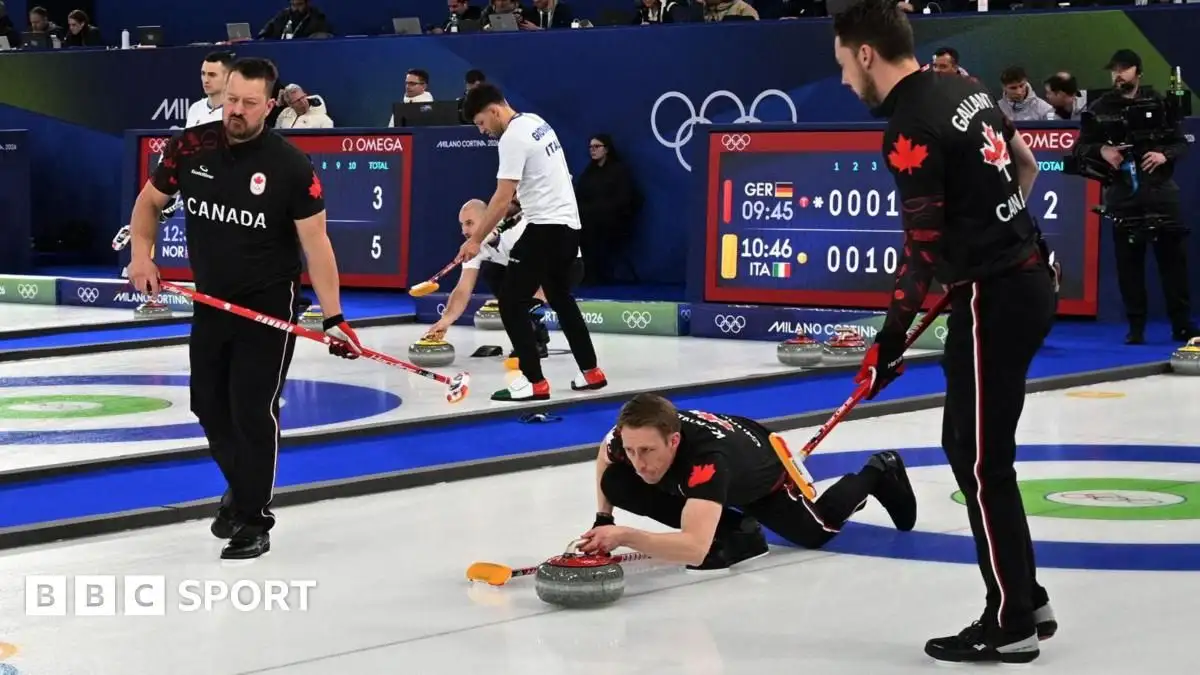
A significant controversy has erupted at the 2026 Winter Olympics, centering on allegations of rule violations in curling. Accusations of "double-touching" a released stone, a move that could provide an unfair advantage, have implicated both Canadian and British teams, sparking heated exchanges and drawing global attention to the sport.
The core of the dispute lies in the interpretation of rules surrounding the release of a curling stone. Specifically, the act of a player touching a moving stone after its initial release, particularly after it has crossed the "hog line," is prohibited. Violations typically result in the stone being removed from play. These allegations have led to direct confrontations, including profanity-laced responses from accused players and widespread discussion about the integrity of the competition.

Timeline of Events and Key Players
The controversy gained significant traction during recent matches, involving prominent curling nations:
Read More: FIFA World Cup 2026 Revenue Reaches $15 Billion With New Ticket Prices
Sweden vs. Canada: During a match between Sweden and Canada, Swedish player Oskar Eriksson reportedly accused Canadian player Marc Kennedy of double-touching his stones. Kennedy denied these allegations, reportedly responding with profanity.
Canada vs. Switzerland: Subsequently, Canadian skip Rachel Homan was accused of the same infraction during a game against Switzerland.
Great Britain's Involvement: The British men's team also faced similar accusations, with one stone being removed from play following a suspected double-touch violation. Despite this, the British team went on to win their match.
The World Curling Federation (WCF) has acknowledged the situation, with statements indicating that game umpires are not always positioned to observe every potential infraction along the entire length of the ice sheet. They have also stated that video replay is not currently used to re-umpire game decisions.

Evidence and Observations
Video footage from the Sweden-Canada match has been cited as potential evidence, appearing to show Marc Kennedy making contact with a stone after its release. Stones are equipped with sensors that are meant to flash green if the player has released the handle before the hog line. In Kennedy's case, these sensors reportedly showed green, yet opponents believed they observed an additional push with his finger to correct the stone's course.
Conflicting interpretations of sensor data and visual evidence fuel the debate.
The WCF's stance on umpire positioning and video replay is a focal point of the discussion.
Debates on Rule Enforcement and Umpiring
A central point of contention is the WCF's current approach to enforcing the double-touch rule.
Read More: Ben Simmons Olympic Return Rumors for 2026 Games
Umpire Limitations
"Game Umpires are situated at the end of each sheet and physically cannot see every delivery infraction.”
"It is not possible for World Curling to have game umpires positioned to observe all hog lines for every stone delivery.”
These statements from the WCF highlight a practical challenge in officiating, suggesting that not every potential violation can be definitively caught by on-ice officials.
Video Replay Stance
"World Curling does not currently use video replay to re-umpire game decisions.”
This policy means that calls made by umpires during a game are generally final, even if subsequent review of broadcast footage suggests an error. This lack of a review mechanism is a significant point of frustration for teams and observers.
Player Declarations
Teams are required to sign a declaration after each game confirming their satisfaction with the outcome. However, this process does not appear to negate the ongoing dispute over the alleged infractions.
Reactions and Accusations
The controversy has led to strong reactions from players and teams.
Denials and Profanity: Marc Kennedy reportedly responded with profanity when denying allegations of cheating, indicating the intensity of the situation.
Counter-Accusations: Notably, Canada has also accused Sweden of cheating, a claim that the Swedish team denies. This suggests a complex web of mutual suspicion.
Team GB's Experience: The British team, despite having a stone removed due to a suspected double-touch, went on to secure a win, highlighting that rule violations do not always definitively alter game outcomes.
Expert and Official Statements
The World Curling Federation has been central to the public discourse surrounding the allegations. Their official statements attempt to clarify the rules and explain the officiating process.
Read More: England World Cup Match: Pubs Open Until 5 AM Monday
The WCF has clarified that touching the handle after the hog line is a violation and results in the stone's removal.
The federation's position on umpire visibility and the non-use of video replay is a key factor shaping the ongoing debate.
Implications and Future Considerations
The "Broomgate" controversy has cast a shadow over the 2026 Winter Olympics curling events. The allegations have bruised the reputation of historically strong curling nations like Canada and have initiated broad discussions about the sport's officiating standards and the adequacy of current enforcement mechanisms.
The potential for future matches between implicated teams, such as a hypothetical semifinal clash between Canada and Sweden, is being framed as must-see television, underscoring the heightened tension and public interest. This situation raises questions about the WCF's future policy on video review and umpire support to ensure fair play and maintain the sport's integrity. The ongoing debate highlights the delicate balance between the traditional nature of curling and the pressures of high-stakes international competition.
Sources
NBC New York: https://www.nbcnewyork.com/olympics/2026-milan-cortina/canada-curling-cheating-scandal-video-explain-what-happened/6462263/
AP News: https://apnews.com/article/winter-olympics-curling-controversy-8b7acc54e259344fb3fcfa68343af5ec
CNN: https://edition.cnn.com/2026/02/14/sport/winter-olympics-curling-canada-sweden
Sky News: https://news.sky.com/story/the-2026-olympic-curling-cheating-controversy-explained-13508143
Sporting News: https://www.sportingnews.com/us/olympics/news/canada-sweden-cheating-controversy-profanity-accusations/8e42c7c5ae75cbaa7146394a