


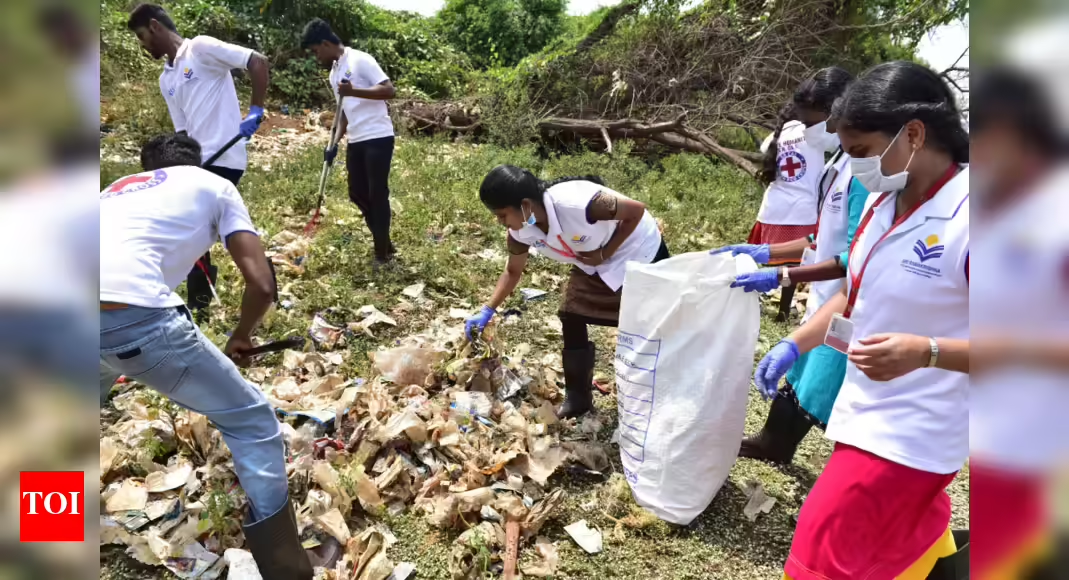
A localized effort, "Swachh Poes," in Chennai's Alwarpet, has taken up the mantle of waste management, focusing on 'source segregation' and sustainability. This initiative, originating in 2019 from residents of Aashiana Apartments at Venus Colony, targets households and businesses along Poes Road and Rajakrishna Road. Its stated aim is to transform this “neglected neighbourhood” into a benchmark for ecological practices, aligning with broader national objectives.
The Swachh Bharat Abhiyan (Clean India Mission), a large-scale governmental undertaking, has aimed to improve sanitation and waste management across India since its inception. While specific impacts are detailed in various studies, including economic and environmental evaluations, the mission's reach has encountered challenges.
The 'Clean India Mission' itself has seen various phases, with Phase II of SBM-G (Swachh Bharat Mission - Gramin), launched post-2019, concentrating on maintaining 'Open Defecation Free' (ODF) status and implementing comprehensive solid and liquid waste management in rural areas. The initiative also aims for 'Sampoorn Swachhata', a more complete state of cleanliness.
Read More: Great Barrier Reef Coral Loss Highest Ever Recorded in 2026
Reports indicate that the COVID-19 pandemic significantly hampered the government's ability to effectively monitor sanitation infrastructure, particularly in remote regions. School closures also led to the deterioration of facilities, requiring urgent maintenance as educational institutions reopened.
Furthermore, the mission's planning included "entirely unserved populations." Economic downturns, however, triggered significant worker migration, altering existing labor dynamics within various states. The complexity of sanitation improvements extends to urban areas, with towns categorized based on waste management and sanitation benchmarks, including ODF+ and ODF++ statuses, signifying maintained infrastructure and further waste management advancements.
The 'Swachh Poes' initiative began with what are described as “baby steps,” signifying an incremental approach to achieving its goals. The movement’s existence highlights a trend where community-led efforts are emerging to address sanitation issues, a phenomenon being observed across Tamil Nadu. The exact scale and measurable outcomes of these community-driven sanitation drives, however, remain a subject for further observation and analysis.
Read More: Air India Crash Report Coming Soon, Government Says