A Strained Calm: Labour's Leadership Under Scrutiny
Recent events have cast a shadow over the Labour Party's leadership, with internal divisions surfacing following a blocked bid by Greater Manchester Mayor Andy Burnham to return to Parliament. While party leader Keir Starmer faces challenges, prominent figures like Burnham are now publicly advocating for stability and a focus on external opposition, particularly the rising influence of Reform UK. The discourse reveals a party grappling with internal aspirations and the broader political landscape.
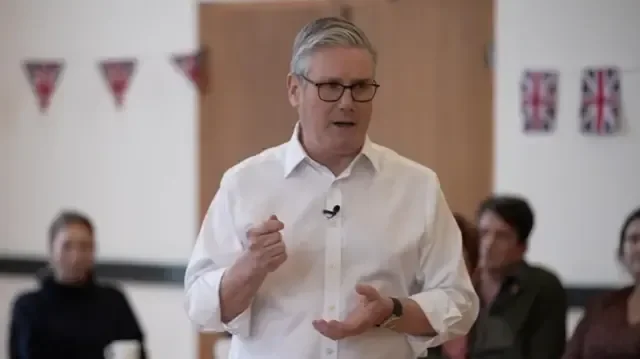
Background: The Gorton and Denton By-election and Burnham's Ambitions
The recent political maneuvering centers around the Gorton and Denton constituency, which became vacant following the resignation of former Labour MP Andrew Gwynne. Greater Manchester Mayor Andy Burnham expressed interest in standing as the Labour candidate, a move that would have seen him potentially return to the House of Commons.
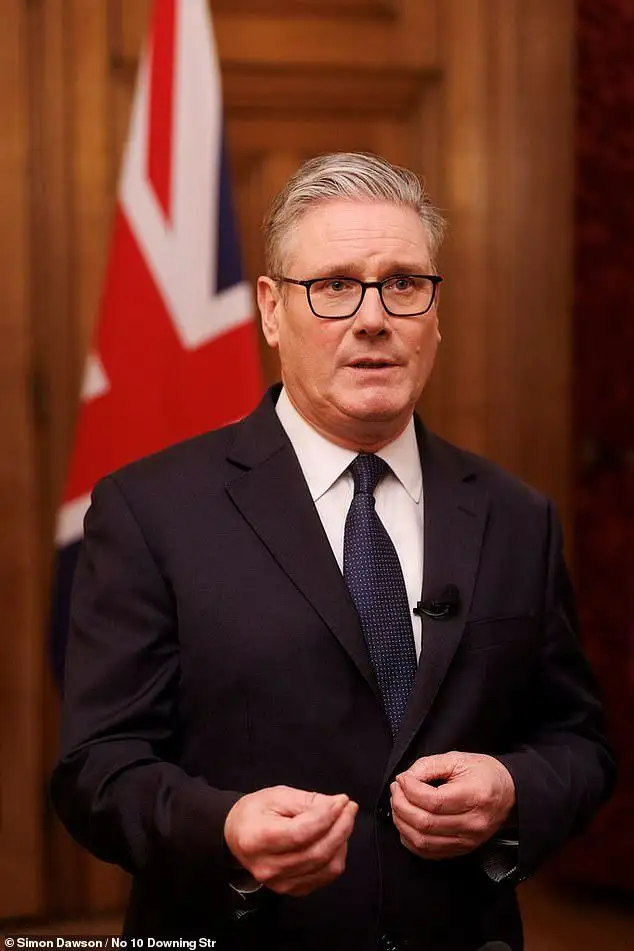
Blocked Candidacy: Labour's National Executive Committee (NEC) ultimately voted against allowing Burnham to contest the by-election. The party's official reasoning cited the substantial disruption and cost of holding a separate mayoral election in Greater Manchester, particularly with other significant elections on the horizon.
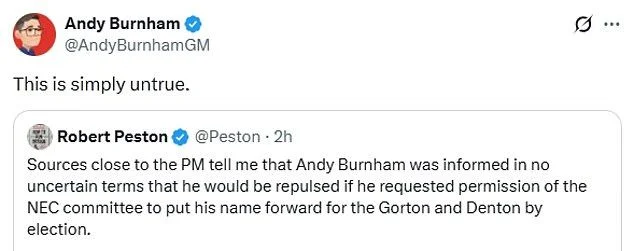
Burnham's Reaction: Burnham stated his disappointment, indicating he had been a long-standing member of the party and that the decision was hard to accept. He also accused Downing Street of lying about the circumstances surrounding the NEC's decision.
Internal Dissent: Reports emerged of a letter signed by approximately 50 Labour MPs who objected to the NEC's decision, viewing it as a tactical error that could benefit Reform UK.
Starmer's Defense: Keir Starmer defended the NEC's decision, emphasizing the need to avoid a costly mayoral election and maintain focus on campaigning for the cost of living and other key issues. He has also stressed his commitment to his mandate and a refusal to "walk away."
Evidence of the Political Climate
The following pieces of information illustrate the tensions and discussions within the Labour Party and the wider political sphere:
Read More: Andrew sublet Royal Lodge cottages for years, NAO report says
Andy Burnham's Statement on Party Unity: Burnham has recently expressed his support for Keir Starmer to remain as Prime Minister and urged the Labour Party to "dial down" internal briefings against each other. He noted his praise for the government's focus on the cost of living and highlighted the working-class representation within Starmer's cabinet. (Article 1)
Reform UK's Engagement with the Vacant Seat: Nigel Farage, leader of Reform UK, has suggested that with Burnham not standing, his party now represents the "anti-Starmer vote" in the Gorton and Denton by-election, believing Reform UK has a better chance of winning without Burnham as a Labour candidate. Reform UK has since announced Matt Goodwin as their candidate for the constituency. (Article 2, Article 11)
Starmer's Resilience Amidst Pressure: Keir Starmer has repeatedly stated his intention to remain leader, asserting he is "not prepared to walk away" and has the "mandate" to lead. He has called for unity against external threats like Reform UK. (Article 3, Article 4, Article 5)
Burnham's Accusations: Andy Burnham has directly accused "No10" (the Prime Minister's office) of lying regarding the by-election spat, disputing claims that he had been informed in advance that his bid to stand would be rejected. (Article 6)
The NEC's Decision and Starmer's Vote: Reports confirm that Labour's National Executive Committee (NEC) voted to block Burnham's request to stand for the by-election. The Prime Minister himself was reportedly among those who voted against Burnham's bid. (Article 7)
Analysis of the Burnham Saga: Political commentators have described the Burnham situation as part of a larger "drama of Starmer's leadership," suggesting it is unlikely to be the last internal challenge. Burnham's past ambitions for the party leadership have also been noted. (Article 8)
Burnham's Candidacy Blocked: Labour's governing body, the NEC, voted to block Andy Burnham's request to return as an MP. The party's stated rationale focused on the electoral implications for the Greater Manchester Mayoralty. (Article 9)
Divisions within Labour: The decision to potentially block Andy Burnham's return to Parliament has highlighted divisions among Labour MPs, with some concerned about the optics of Starmer preventing a prominent figure from standing. (Article 10)
Public Opinion: A poll suggested that a significant portion of the British public (30%) believe Andy Burnham would perform better as Prime Minister than Keir Starmer. (Article 11)
Justification for Blocking Burnham: Starmer defended the decision, stating it was to prevent a costly mayoral election and to maintain focus on key campaign issues like the cost of living. (Article 12)
Strategic Risk of Blocking Burnham: Analysts suggest that while Starmer may have had limited options, blocking Burnham presents a significant risk for the party's internal stability and public image. (Article 13)
Other Political Developments: Parallel to these internal discussions, other political issues have arisen, including scrutiny over documents related to Lord Peter Mandelson's appointment as British ambassador, with MPs agreeing to release some papers. (Article 14)
Internal Dynamics: Leadership Ambitions vs. Party Stability
The events surrounding Andy Burnham's attempted return to Parliament underscore a persistent undercurrent of leadership ambition within the Labour Party. Burnham, a figure with prior aspirations for the leadership, found himself at odds with the party's current direction and leadership's decision-making.

Burnham's Position: Despite the rejection, Burnham has publicly signaled a desire for unity and support for Starmer, a move that could be interpreted as an effort to de-escalate internal tensions. His emphasis on the "Greater Manchester way" built on "togetherness" suggests a commitment to cooperative politics. (Article 6, Article 9)
Starmer's Stance: Keir Starmer has maintained a firm position on his leadership, reiterating his commitment to his mandate and refusing to be drawn into internal disputes that could distract from the party's broader objectives, such as addressing the cost of living. (Article 4, Article 5)
The "Anti-Starmer" Vote: The narrative that Burnham's exclusion could benefit Reform UK highlights a perceived vulnerability in Starmer's leadership, suggesting that dissent within Labour could be channeled towards external opposition. (Article 2, Article 11)
External Challenges: The Rise of Reform UK
The political maneuvering within Labour occurs against a backdrop of increasing pressure from Reform UK. The party, particularly under Nigel Farage's influence, is positioning itself as a significant opposition force.
Reform UK's Electoral Strategy: Reform UK appears to view the Gorton and Denton by-election as a significant opportunity. By framing the contest as a "referendum on Keir Starmer," they aim to capitalize on any internal Labour disunity or public dissatisfaction with the current leadership. (Article 11)
Burnham's Exclusion as a Political Tool: Reform UK has explicitly linked Burnham's exclusion from the Labour candidacy to their own electoral prospects, suggesting his presence might have made it harder for them to win. (Article 2)
Labour's Counter-Narrative: Keir Starmer has consistently framed the political battle as being against "enemy" figures like Nigel Farage, attempting to unify his party against this external threat. (Article 16)
Conclusion: Navigating Internal Tensions and External Threats
The recent political events reveal a Labour Party under pressure, both from internal dissent and the growing prominence of Reform UK. Andy Burnham's public backing of Keir Starmer, coupled with his call for party unity, suggests an attempt to recalibrate the narrative and focus on broader political objectives.
Burnham's Calculated Support: Burnham's endorsement of Starmer, while seemingly contradictory to his own political ambitions and past frustrations, may be a strategic move to position himself as a unifying figure within the party and to emphasize a shared focus on issues like the cost of living.
Starmer's Continued Resilience: Starmer's consistent message of resilience and refusal to "walk away" demonstrates his determination to lead the party through internal challenges.
The Reform UK Factor: The explicit attempts by Reform UK to exploit perceived divisions within Labour highlight the strategic importance of party unity in the face of external electoral threats. The outcome of the Gorton and Denton by-election, and how effectively Labour can present a united front, will be crucial indicators of the party's internal health and its prospects in the broader political arena.
Sources
The Guardian: Articles provide in-depth reporting on UK politics, including live updates and analysis.
https://www.theguardian.com/politics/live/2026/feb/10/keir-starmer-labour-leadership-uk-live-updates-politics-cabinet-latest-news
https://www.theguardian.com/politics/live/2026/jan/26/labour-andy-burnham-byelection-blocked-police-reforms-starmer-streeting-farage-uk-politics-live-news-updates
https://www.theguardian.com/politics/live/2026/feb/09/starmer-mandelson-epstein-labour-mcsweeney-conservatives-latest-news-updates
https://www.theguardian.com/politics/2026/jan/26/andy-burnham-barred-from-byelection-to-help-labour-focus-says-scotland-secretary-douglas-alexander
https://www.theguardian.com/politics/2026/jan/25/blocking-andy-burnham-keir-starmer-ruthlessness-weakness-labour
https://www.theguardian.com/politics/live/2026/feb/04/peter-mandelson-files-us-ambassador-jeffrey-epstein-keir-starmer-tories-uk-politics-live-news-updates
https://www.theguardian.com/politics/live/2026/jan/27/uk-politics-latest-news-updates-keir-starmer-leaseholders-andy-burnham-labour-reform
BBC News: Provides comprehensive coverage of UK politics, including detailed reports and analysis.
Sky News: Offers real-time political updates and analysis.
https://news.sky.com/story/politics-latest-mandelson-starmer-mcsweeney-epstein-files-labour-leader-12593360
https://news.sky.com/story/sir-keir-starmer-blocks-andy-burnham-from-byelection-race-13498819
Independent: Reports on political developments, including leader statements and party reactions.
https://www.independent.co.uk/news/uk/politics/starmer-resignation-latest-news-streeting-mandelson-epstein-b2917201.html
https://www.independent.co.uk/news/uk/politics/labour-conference-2025-live-reeves-tax-starmer-latest-updates-b2835609.html
Daily Mail: Provides reporting on UK political events and figures.
https://www.dailymail.co.uk/news/article-15501093/Starmer-Labour-MPs-rival-Andy-Burnham-candidate-Denton-election-council-leader.html
BBC News (Second Instance): Another article from BBC News detailing the latest political updates.