
The digital currency world is in a tailspin. Bitcoin, the undisputed king of cryptocurrencies, has plunged to levels not seen since Donald Trump first entered the White House. This dramatic reversal, defying years of optimistic projections and even the former President’s public endorsements, begs a crucial question: are we witnessing a temporary dip, a systemic failure, or a calculated manipulation of the market?
For years, Bitcoin's narrative has been one of exponential growth, digital revolution, and an unstoppable force. Yet, in recent weeks, that narrative has crumbled. Prices are nosediving, wiping out trillions in market value and leaving investors scrambling for answers. This isn't just a blip; it's a sharp, painful reminder that in the volatile world of digital assets, the only constant is uncertainty.
The Echoes of a Presidency: Trump, Crypto, and the Rise and Fall
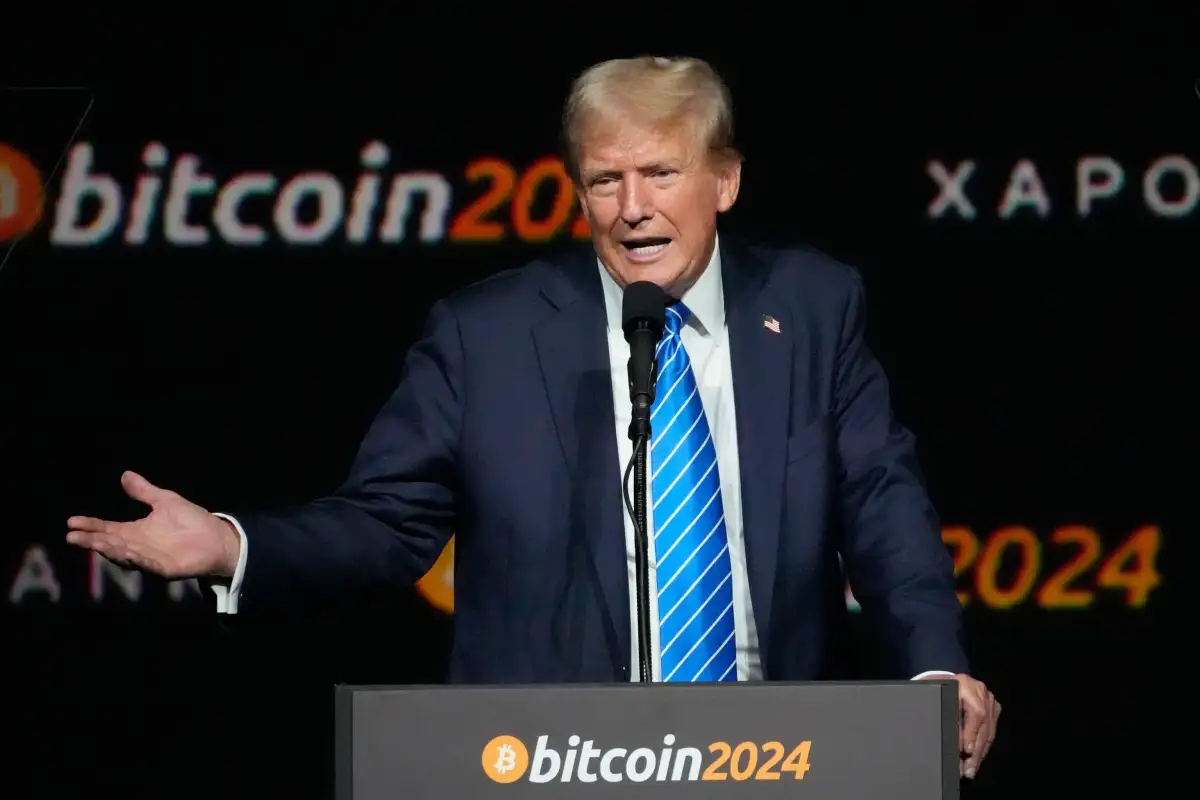
The timing of Bitcoin's current nosedive is particularly striking. Multiple reports highlight that the cryptocurrency has hit its lowest point since Donald Trump took office in January 2017. This isn't just a casual observation; it's a stark indicator of how far the market has fallen from its recent highs, which were, in part, fueled by the perceived support of the Trump administration and his own public pronouncements on crypto.
Read More: Solaris Energy SEI Stock Price Forecast Reaches $91.98 by July 2027
Trump's "Crypto-Friendly" Stance: During his presidency, and continuing into his post-presidency, Donald Trump has publicly expressed support for cryptocurrency, often linking it to innovation and American economic strength. This perceived backing, however informal, gave a psychological boost to the crypto market.
The 2024 Bull Run: Following the 2024 election, and with a renewed perception of a pro-crypto future under a potential Trump return, Bitcoin experienced a significant surge, reaching record highs. This period saw many investors flocking to the asset, encouraged by the sentiment that a Trump presidency would usher in a more favorable regulatory environment.
The Current Plunge: Now, less than two years into a new term that has seen cryptocurrency reach all-time highs, Bitcoin is not only erasing those gains but has fallen below levels seen before Trump's first inauguration.
This historical marker – the "lowest since Trump took office" – is a loaded statement. It implies a full cycle of growth and subsequent collapse, all within a period often characterized by supposed crypto advocacy from a key political figure.

The market’s current position is a stark regression, negating years of perceived progress and returning to a pre-Trump era valuation, despite significant political rhetoric supporting crypto.
The ETF Effect: Friend or Foe to Bitcoin's Stability?
A significant development in the crypto market in recent years has been the introduction of spot Bitcoin Exchange-Traded Funds (ETFs) in the US. These financial products allow mainstream investors to gain exposure to Bitcoin without the complexities of direct ownership. While initially hailed as a catalyst for further adoption and price appreciation, some analysts are now questioning their role in the current downturn.
Read More: Binance Position Info V2 Changes API for Traders on April 7 2026
"One popular way of investing in bitcoin is through spot bitcoin ETFs, or exchange-traded funds, which allow investors to have a stake in bitcoin without directly owning the cryptocurrency." (AP News)
The rise of ETFs has undoubtedly brought more capital into the crypto space, creating a broader investor base. However, it also introduces a new layer of market dynamics:
Increased Volatility: ETFs, by their nature, can experience significant inflows and outflows based on market sentiment. Large-scale selling pressure on ETFs could translate directly into selling pressure on the underlying Bitcoin, amplifying price drops.
Institutional Influence: ETFs are often favored by institutional investors. A shift in strategy by these large players, driven by risk aversion or other factors, can have a disproportionate impact on Bitcoin's price.
Liquidation Overhang: The increased accessibility through ETFs might also be contributing to a "liquidation overhang," where a large number of assets are available for sale, driving down prices.
Rob Hadick, general partner at Dragonfly Capital, commented on this, stating:
"Those losses mounted this week as the release of crucial U.S. economic data was delayed due to a partial government shutdown. Bitcoin briefly dived below the $73,000 mark on Tuesday, hitting its lowest price in nearly 16 months." (CNBC)
Is the very instrument designed to legitimize and broaden Bitcoin’s appeal now contributing to its instability? Are these ETFs simply acting as a conduit for traditional market volatility to flood into the digital asset space, rather than fostering independent growth?
Spot Bitcoin ETFs, while democratizing access, may be amplifying market volatility and acting as a transmission mechanism for traditional financial risks into the cryptocurrency ecosystem.
Read More: Rocket Companies brand update in April 2026 changes logos and names
Geopolitical Tremors and Economic Uncertainty: The Hidden Hands
While the crypto community often focuses on internal dynamics and technological advancements, the recent plunge in Bitcoin's price also appears to be deeply intertwined with broader global uncertainties. The reports suggest a confluence of geopolitical tensions and economic anxieties are pushing investors away from speculative assets like Bitcoin.
Global Conflict and Instability: Reports point to looming geopolitical conflicts and ongoing wars as major drivers of investor caution.
Negotiations over Greenland
U.S.-backed leadership in Venezuela
The war between Russia and Ukraine
Escalating U.S. threats against Iran
Economic Uncertainty and Tariffs: The specter of protectionist trade policies, such as tariffs threatened by Trump against various countries, further fuels economic uncertainty.
Threats of tariffs against Canada, South Korea, and eight European countries.
Monetary Policy Fears: Concerns about the Federal Reserve's future monetary policy are also playing a role. The expectation that the Fed might adopt a "hawkish stance," cutting interest rates and shrinking its balance sheet, is generally seen as unfavorable for cryptocurrencies, which tend to perform better under looser monetary conditions.
Manuel Villegas Franceschi from Julius Baer noted, "The market fears he may adopt a hawkish stance. A smaller balance sheet is not going to provide any tailwinds for crypto." (Geo.tv)
"Experts who previously spoke to ABC News attributed the recent decline in crypto prices to looming geopolitical and economic uncertainty, which has prompted a momentum-driven selloff as crypto holders raced to the exits." (ABC News)
This suggests that Bitcoin, despite its decentralized origins, is not immune to the forces shaping global markets. The flight to safety during times of uncertainty often sees investors divest from high-risk, speculative assets.

The sell-off in Bitcoin appears to be a multi-faceted reaction to a volatile geopolitical landscape and economic uncertainty, leading investors to retreat from speculative assets and consider the impact of potential monetary policy shifts.
The Regulatory Maze: A Constant Source of Jitters
Despite the past perceived pro-crypto sentiment from the Trump camp, the ongoing uncertainty surrounding cryptocurrency regulation in Washington continues to cast a long shadow over the market. This regulatory ambiguity creates a perpetual state of apprehension for investors and businesses alike.
Read More: Pearl Mining 2026: Technical Problems Cause Profit Loss
Lack of Clear Guardrails: Lawmakers are still grappling with how to effectively regulate the burgeoning digital asset industry. This legislative vacuum leaves investors uncertain about the future legal standing and operational framework for cryptocurrencies.
Impact on Crypto Businesses: Companies that facilitate crypto trading, as well as those whose primary business model revolves around Bitcoin, have been hit particularly hard. The lack of clear regulatory pathways can stifle innovation and deter investment.
Trump's Shifting Stance? While Trump has been historically supportive, the current market downturn raises questions about whether a future administration would maintain this stance, especially if broader economic concerns take precedence. Has his rhetoric always matched practical policy intent, or was it more of a political tool?
"Adding to the investors' jitters is ongoing uncertainty around lawmakers' efforts to create legislative guardrails for the cryptocurrency industry, in addition to liquidation overhang in the digital assets market…" (CNBC)
The ongoing debate over regulation is not just about investor protection; it's about the very legitimacy and long-term viability of the cryptocurrency ecosystem.
The persistent lack of clear legislative frameworks for cryptocurrencies in Washington D.C. is a significant contributor to investor anxiety, exacerbating market downturns and impacting the operational landscape for crypto-centric businesses.

The Bigger Picture: Maturation or Meltdown?
Is Bitcoin merely maturing, as some suggest, or are we witnessing a more fundamental breakdown? The price falling to pre-Trump levels is more than a technical indicator; it’s a psychological blow.
William Barhydt, CEO of Abra Capital Management, believes the market is maturing and expects a rebound. However, Deutsche Bank noted that while crypto might not disappear, it doesn't predict a return to the "Trump-driven highs."
| Perspective | Analyst/Firm | Outlook | Key Rationale ||—-|—-|—-|—-|| Maturing Market, Expected Rebound | William Barhydt (Abra Capital Management) | Bullish Rebound | Cryptocurrency is maturing. || No Return to Trump-Highs, Not Disappearing | Deutsche Bank | Cautious Optimism | Crypto will persist but not reach previous peaks. || Following USD, Downtrend Continues | Deutsche Bank | Bearish Trend | Bitcoin is now more closely following the US Dollar's price trends, which have also seen recent dips. || Underlying Fundamentals Strong | Rob Hadick (Dragonfly Capital) | Cautiously Optimistic | Stablecoins and tokenized assets are gaining traction. |
Read More: Fetch.ai, SingularityNET, Ocean Protocol Merge for AI Crypto
The fact that Bitcoin is now seemingly mirroring the US Dollar's price movements, as noted by Deutsche Bank, is a significant shift. This suggests a potential loss of its "digital gold" narrative – its ability to act as an independent store of value – and a closer correlation with traditional fiat currencies and their economic drivers.
The current market slump challenges Bitcoin's uncorrelated "digital gold" narrative, with its price now showing a stronger correlation to the US Dollar and facing headwinds from geopolitical, regulatory, and monetary policy concerns, leading to diverging expert opinions on its immediate future.
The Verdict: A Crisis of Confidence or a Buying Opportunity?
The current state of Bitcoin is a complex tapestry woven from political rhetoric, global anxieties, evolving financial instruments, and regulatory uncertainty. The price falling to its lowest level since Donald Trump took office is not just a statistic; it’s a symptom of deeper issues at play.
Read More: Bitcoin Price Drops Below $60K: What Investors Need to Know
We've seen Bitcoin climb to record highs on the back of speculative fervor and a perceived political tailwind. Now, it plummets as fear grips global markets and the promises of a crypto-friendly future seem distant.
What next?
Regulatory Clarity: The path forward for Bitcoin and other cryptocurrencies hinges significantly on clear and consistent regulatory frameworks. Will Washington provide a stable environment or continue to create a climate of uncertainty?
Geopolitical De-escalation: A reduction in global tensions could ease investor fears and potentially encourage a return to riskier assets. However, the current geopolitical landscape suggests this is unlikely in the short term.
Fed Policy Impact: The Federal Reserve's monetary policy decisions will play a crucial role. A pivot towards more accommodative policies could provide a much-needed boost to cryptocurrencies.
ETF Performance: The continued performance and investor sentiment towards spot Bitcoin ETFs will be a key indicator. Are they a sustainable growth engine or a catalyst for further volatility?
The market's sharp decline serves as a potent reminder that the cryptocurrency landscape is still maturing. While some see this as a painful but necessary correction, a chance for genuine innovation to emerge from the ashes of speculation, others fear a more profound crisis of confidence is underway. The narrative of an unstoppable digital revolution is currently being challenged by the harsh realities of global economics and politics. The coming months will be critical in determining whether Bitcoin can reclaim its upward trajectory or if this marks a significant turning point in its history.
Read More: New Financial Year 2027: Property Investors Need New Tax Strategies
Sources:
BBC News - Bitcoin price hits lowest level since Trump took office
AP News - Bitcoin price falls below pre-Trump second term levels, now hovering below $67,000
ABC News - Bitcoin plunges to lowest level since October 2024
Geo.tv - Bitcoin falls below $70,000, hits lowest level since Trump took office
CNBC - Bitcoin briefly breaks below $73,000 to lowest since November 2024 as heavy selling resumes
Al Jazeera - Bitcoin plunge continues, erasing gains since Trump’s election