


By a Free-Thinking Investigative Journalist
The cinematic universe teeters on the brink, and whispers are growing louder than the roars of any on-screen beast. Avengers: Doomsday is upon us, shrouded in secrecy and fueled by a relentless tide of fan speculation. At the heart of this storm? The enigmatic return of Robert Downey Jr., not as the beloved Iron Man, but as the chilling Doctor Doom. This isn't just a casting announcement; it's a narrative bomb, forcing us to confront the spectral presence of Tony Stark's legacy and its potential corruption. Is Doom merely a mask, or is it the very echo of Iron Man's genius twisted into villainy?
The Shadow Play: What's Beneath the Mask?
Marvel has always excelled at building anticipation, but the marketing for Avengers: Doomsday feels particularly… purposeful. Trailers offer fleeting, portentous glances, dramatic lighting, and characters standing unnervingly still. The Russo brothers, back at the helm, have even launched a section on their website dedicated to crowd-sourced guesswork. But is this all a masterful distraction, or are we being subtly guided toward a truth that's far more disturbing?
Read More: The Devil's Rain 4K release sparks debate on cult status
The official trailer reveals precisely nothing substantial about the plot.
A website section is dedicated to fan theories, actively encouraging speculation.
Teasers rely on mood and stoic characters rather than plot exposition.
This deliberate ambiguity isn't just about keeping secrets; it's about framing the narrative. When Robert Downey Jr., the very face of Iron Man, is confirmed to play Doctor Doom, the question isn't if it's significant, but how. Is this a simple multiverse twist, or is Doom’s existence intrinsically tied to Stark’s sacrifice?
"We’ve previously heard that Doom will use his similarity to Iron Man to manipulate Earth-616’s Mightiest Heroes." - comicbookmovie.com
This statement alone is a flashing red light. Manipulation implies a deep understanding, a shared history, or even a direct lineage. If Doom looks like Iron Man, and his purpose is to manipulate, then the visual echo must be more than a coincidence. It suggests a deliberate strategy, perhaps even an appropriation.
Read More: Mortal Kombat 3 Script Done, But Studio Has Not Said Yes Yet
Echoes of Sacrifice: Was Iron Man's End Orchestrated?
The narrative has been building for years, with Doctor Doom’s presence felt across the MCU, even before his confirmed casting. This slow burn suggests a deeper plan, one that might have been set in motion as early as Avengers: Endgame.
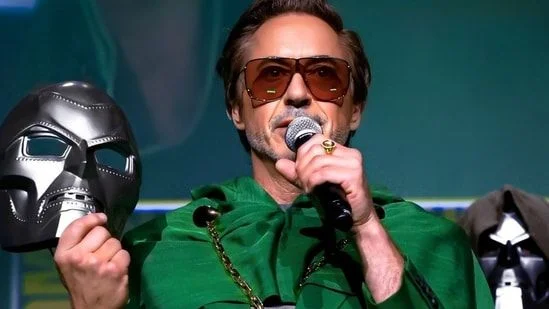
The prevailing theory, and one that’s gaining traction, is that Doctor Strange, the Sorcerer Supreme, knew about the threat of Doctor Doom all along. If this is true, did Strange’s prescient knowledge influence his guidance to Tony Stark?
The Theory: Doctor Strange foresaw the potential rise of Doctor Doom and believed Iron Man’s sacrifice in Endgame was necessary to prevent Doom’s eventual arrival or dominance.
The Implication: This would mean Iron Man’s death wasn't just a heroic act against Thanos, but a pre-emptive strike against a far greater, multiversal evil that Strange himself helped orchestrate.
"If Doctor Strange knew about Doctor Doom, and it influenced Stark's death, as the MCU theory suggests, then it would connect to the Russos' comment." - screenrant.com
This raises profound questions:
If Strange knew, why wasn't the public informed?
Was Iron Man sacrificed rather than merely choosing heroism?
What level of omniscience does Doctor Strange truly possess, and what are its ethical boundaries?
If Doom is a Stark variant, as many theories suggest, was Strange trying to prevent a darker version of his friend from ever coming into existence?
The "Variant" Conundrum: Is Doom a Corrupted Stark?
The casting of Robert Downey Jr. as Doctor Doom has ignited a wildfire of "variant" theories. Given the multiversal nature of Avengers: Doomsday and the upcoming Secret Wars, the idea that Doom is a Tony Stark variant is not just plausible—it’s practically invited.
Read More: Supergirl Film Cut Changes Due to DC Studios Fights
Several distinct theories attempt to explain this visual and casting overlap:
Face Stealing: Doom, upon arriving on Earth-616, steals Iron Man’s face, or perhaps his identity, to gain trust and sow chaos.
Survivng Stark Variant: A Tony Stark from another reality survived his encounter with Thanos and has been twisted into the villainous Doctor Doom.
Post-Civil War II Swap: In a nod to the comics, Doom assumes Tony Stark's identity and life, with Stark finding himself in Doom's less fortunate circumstances.
| Theory Type | Core Concept | Narrative Implication | Evidence/Support |
|---|---|---|---|
| Face/Identity Theft | Doom physically or technologically adopts Iron Man's likeness. | Creates immediate confusion and distrust among heroes; allows Doom to infiltrate. | Visual similarity, strategic manipulation by Doom. |
| Evil Stark Variant | A parallel universe Tony Stark endured a darker fate and became Doom. | Explores the "what if" of Iron Man's darker potential; allows for direct confrontation with Stark's legacy. | Multiversal plot, casting of RDJ. |
| Comic Inspiration Swap | Doom and Stark swap lives, similar to Civil War II. | Creates a dramatic irony; forces characters to confront the consequences of identity. | References to comic storylines, RDJ playing Doom. |
| Doom is "Behind the Face" | RDJ plays Doom, but it's not the "real" Doom, or his presence is temporary. | Suggests layers of deception or a surrogate for the true villain. | Rumors of RDJ not "sticking around for the long haul." |
"The easiest way to explain why Doom looks like Iron Man is that he steals the hero’s face before he arrives on Earth-616." - comicbook.com
But if Doom is a Stark variant, what does that say about the man we knew? Was his heroism merely one path, and Doom represents another? Or is this an even more insidious manipulation, where Doom uses Stark's very image to dismantle the world Iron Man fought to protect?
The X-Men Gambit: Chaos as an Origin Story?
Adding another layer of complexity, the arrival of the X-Men is also shrouded in mystery. Instead of a traditional origin story, fan theories suggest that Avengers: Doomsday will leverage the multiversal chaos to introduce mutants retroactively.
This implies that the fabric of reality itself is fraying, creating the perfect storm for new powers and new threats to emerge.
Multiversal Instability: The film's central conflict could involve widespread reality tears.
Emergent Mutants: The X-Men, or at least their arrival, could be a direct consequence of this instability, appearing without traditional exposition.
"Rather than debuting mutants in a neat origin story, some fans think Doomsday will use multiversal instability to retroactively introduce the X-Men." - theguardian.com
But what does this mean for the core Avengers narrative?
Will the introduction of the X-Men be a direct result of Doctor Doom’s actions, or is he merely a catalyst within a larger cosmic event?
If mutants are a product of multiversal breakdown, how will they react to the established heroes and the emerging villains?
Could the introduction of the X-Men be another layer of Doom's manipulation, bringing in new players to an already chaotic game?
Conclusion: The Unmasking of Legacy
Avengers: Doomsday isn't just shaping up to be another epic superhero showdown; it's poised to be a profound exploration of legacy, sacrifice, and the darkest reflections of our heroes. The deliberate casting of Robert Downey Jr. as Doctor Doom, coupled with the multiversal narrative, points towards a deeply intertwined destiny.
Read More: The Odyssey IMAX movie crops 40% of image for most viewers
Whether Doctor Doom is a literal variant, a spiritual successor, or a manipulator wearing a familiar face, his connection to Iron Man is the lynchpin. The film’s success may hinge not just on its spectacle, but on how it answers these unsettling questions about the ghost of heroes past. The greatest mystery might not be who is behind the mask, but what that mask represents: the ultimate perversion of everything Iron Man stood for, or perhaps, the terrifying realization that he was always capable of becoming this.
The silence from Marvel is deafening, but the theories speak volumes. We are entering an era where the line between hero and villain is blurred, where legacy can be corrupted, and where the greatest threat might be the one wearing the face of a fallen icon. The stakes have never been higher, and the questions linger, demanding answers.
Sources:
:max_bytes(150000):strip_icc()/MORTAL-KOMBAT-II-LEWIS-TAN-050826-f54556c368f34929b0ed2ea7f658c792.jpg)

