


JPMorgan strategists are actively endorsing Asian equity markets, specifically South Korea and Taiwan, projecting considerable gains driven by the accelerating 'artificial intelligence' (AI) boom. The bank’s outlook points to potential upside of around 20% for Taiwan's benchmark index, with its bull-case target for South Korea’s Kospi index raised to 10,000 points, representing a potential further run of over 25%.

This pronounced focus on East Asian technology hubs stems from their central role in the global AI supply chain, particularly in the fabrication of advanced semiconductors and AI hardware. Companies like TSMC and Samsung are highlighted as key beneficiaries, powering market gains in both South Korea and Taiwan.
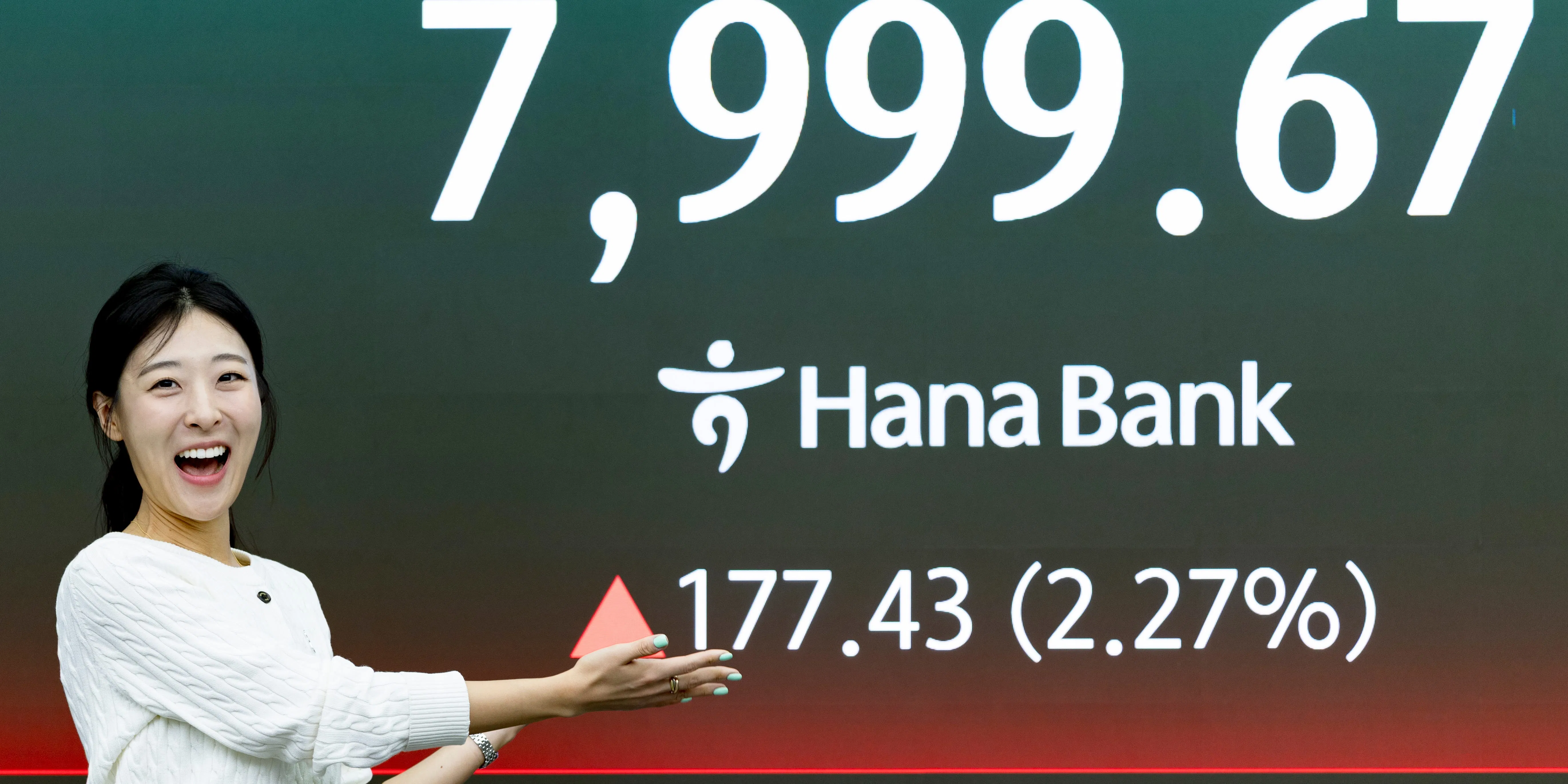
While the AI rally fuels significant momentum in Asia, other markets are notably lagging. India finds itself among the weaker performers, attributed to its substantial reliance on oil imports, limited direct exposure to AI-related industries, and a weakening currency. This contrasts sharply with the strong investor appetite and bullish positioning observed in derivatives markets for Korean and Taiwanese equities, where rising implied volatility accompanies stock price increases.
Read More: US Treasury Yields Rise Above 5.1% Due to Inflation Fears

Global Dynamics and Regional Shifts
The AI-driven equity surge is reshaping global investment flows, drawing attention away from concerns like the Iran conflict and towards technology-centric markets in Asia. Indices such as South Korea's Kospi and Taiwan's Taiex have significantly outperformed global peers. This performance is bolstered by investor anticipation of continued growth in AI hardware and semiconductor stocks.

Strategic Realignments and Market Valuations
JPMorgan’s investment strategy has seen a tactical shift, favoring Taiwan's tech sector amid the AI expansion. This recalibration involves downgrading consumer discretionary and communication services sectors in China due to a sluggish internet environment, while also adjusting ratings for utilities based on rising power demand. Concurrently, the bank has upgraded Chinese equities to 'overweight', citing attractive valuations and potential for inflows, projecting approximately 19% upside for the MSCI China Index into 2026. This bullish stance on China is underpinned by factors including accelerating AI adoption, supportive government policies, improved shareholder returns, and a potential shift of domestic liquidity into equities.
Read More: Gates Foundation and Anthropic give $200M for AI in health and education
Background: The AI Infrastructure Race
The global race to build AI infrastructure, characterized by massive capital expenditures, particularly among US hyperscalers, necessitates passing through Asia. Even with US export controls, China's AI innovation remains a significant factor, underscoring the pervasive influence of AI across diverse technological ecosystems. While the investment and adoption of AI remain a paramount theme, the physical infrastructure supporting this buildout, predominantly located in South Korea and Taiwan, positions these regions as consistent beneficiaries. The recent performance of Taiwan's stock market, surpassing the market values of the UK and Canada, and South Korea's market capitalization on a similar trajectory, illustrates the scale of this AI-induced economic expansion.


