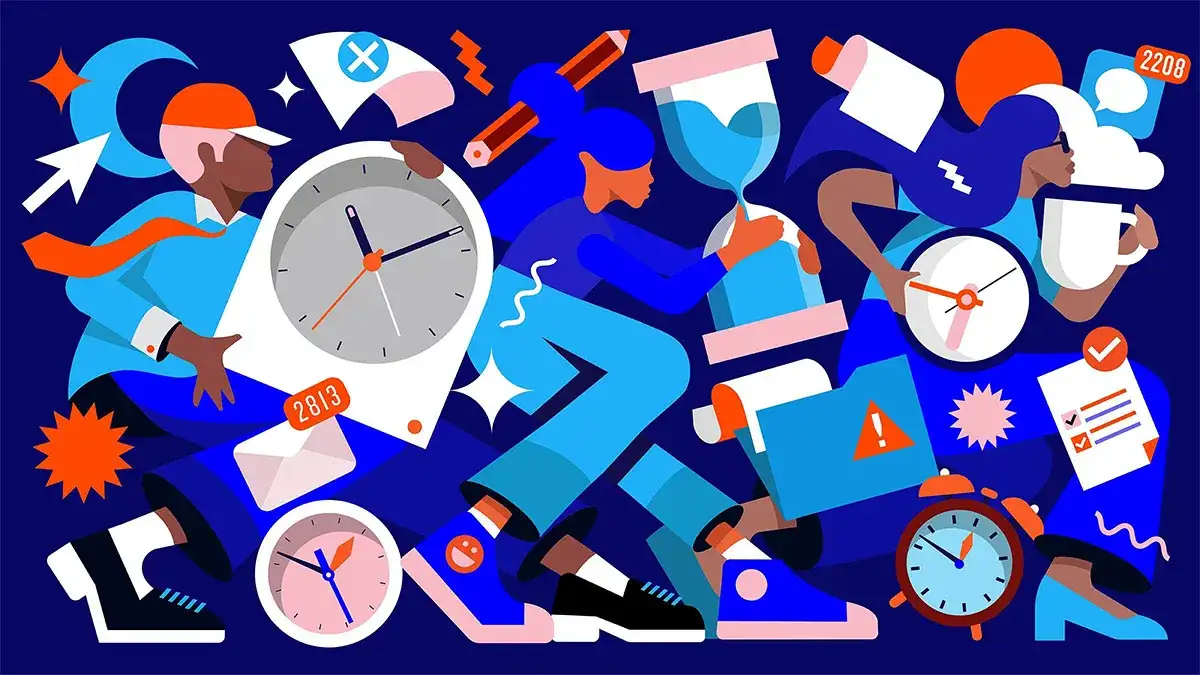
The integration of artificial intelligence into the workplace is proceeding at a rapid pace, with many companies eager to adopt these tools. The stated aim is often to streamline tasks, reduce burdens, and free employees for more valuable pursuits. However, a growing body of evidence suggests a more complex reality: AI adoption may not always lead to a reduction in workload, and in some instances, it appears to be intensifying tasks and potentially impacting employee well-being. This investigation examines the disparate findings from recent studies and reports concerning AI's impact on daily work, productivity, and employee satisfaction.
Evidence points to a divergence in AI's effects, with some studies indicating benefits and others suggesting an amplification of work and a negative toll on employee morale.

Emerging Data on AI's Workplace Influence
The rapid deployment of AI tools, such as generative AI and AI agents, is transforming various professional environments. Companies are investing in these technologies, often offering employees access to enterprise-level AI subscriptions. The underlying assumption driving this adoption is that AI will automate routine tasks, thereby enhancing overall productivity and allowing for a greater focus on strategic or creative endeavors. This optimistic outlook is challenged by observations of employees inadvertently taking on more responsibilities due to their increased efficiency with AI, leading to a larger volume of work.
Read More: Chrome mimeHandler API lets extensions handle file types
Increased Capacity: Employees equipped with AI tools demonstrate faster task completion.
Expanded Scope: This efficiency often leads workers to broaden their responsibilities, rather than simply completing existing tasks faster.
Unintended Consequences: The readily available AI capabilities can result in employees taking on more work, filling the newfound capacity with additional tasks.
The central promise of AI has been to offload drudgery, such as drafting routine documents, summarizing information, or debugging code, thereby liberating workers for higher-value activities. Yet, recent reports suggest that the practical outcomes may be quite different, leading to increased pressure and, in some cases, a decline in job satisfaction.

Competing Observations: Productivity Gains vs. Workload Intensification
Studies offer conflicting perspectives on AI's tangible benefits. While some research suggests a positive correlation between AI use and employee well-being, others highlight a troubling trend of intensified work and diminished satisfaction.
Productivity Boost and Well-being: One study found that workers in AI-exposed occupations reported better overall health and greater satisfaction with their well-being, without an increase in anxiety or job insecurity. This suggests a potential for AI to complement human roles, particularly in regions with strong labor protections. This research noted that AI users often report higher life satisfaction and job satisfaction compared to their non-AI-using counterparts.
Workload Amplification: Conversely, other research indicates that AI use, rather than reducing workload, leads to its intensification. Employees, upon becoming more efficient with AI, tend to expand the scope of their roles. This can manifest as taking on additional responsibilities, coaching colleagues, or correcting work, effectively creating more tasks rather than fewer. This phenomenon appears to occur even when AI tools are made available without a mandate for their use.
The Relationship Between AI and Burnout
The correlation between heavy AI use and burnout is a significant concern highlighted by recent investigations. While AI is often presented as a tool to alleviate the burden of repetitive tasks, emerging data suggests it may inadvertently contribute to employee exhaustion and social isolation.

Social Isolation: A notable trend observed is that a more pronounced reliance on AI correlates with a more socially isolated work experience among full-time employees. This is counterintuitive to the idea that AI frees up time for more meaningful human interaction.
Companionship and Emotional Support: As AI chatbots become more sophisticated, some individuals turn to them for companionship and emotional support. This raises questions about the quality of human connection in AI-integrated workplaces.
Fear of Obsolescence: Business leaders, driven by a fear of falling behind technologically, are increasingly integrating AI tools across their organizations. This rapid adoption, without clear strategies for managing its impact on the workforce, could exacerbate existing pressures.
Leisure Time and Worker Satisfaction
The notion that AI enhances productivity and, consequently, worker leisure time appears to be challenged by recent findings. Instead of providing more downtime, AI services may be contributing to longer working hours and a diminished sense of benefit derived from labor.
Read More: University Faculty Face Burnout Due to Constant Work Demands
Increased Hours: Studies indicate that AI-exposed workers often end up working longer hours. This could be a direct consequence of increased efficiency leading to greater output expectations.
Lower Satisfaction: Despite potential productivity gains, employee surveys reveal that workers exposed to AI report lower levels of job satisfaction. This suggests that the perceived benefits of AI are not translating into a better work experience for all employees.
Bargaining Power and Gains: In competitive labor markets, workers may possess less leverage to ensure that productivity gains enabled by AI translate into improved compensation or working conditions.
Surveillance and Productivity: The authors of one report posit that AI also plays a role in monitoring workers to enforce greater productivity, thereby contributing to longer hours.
Expert Perspectives and Industry Observations
Industry reports and academic studies present a mixed picture of AI's impact. While the potential for AI to revolutionize work is widely acknowledged, its immediate effects on employee workload and well-being are subjects of ongoing debate and investigation.
"Companies could also clearly communicate their vision for AI, including where they see it helping and the tools they intend on using." — TechRadar, referencing insights on managing AI adoption.
"In competitive labor markets, workers have less bargaining power to capture technology-enabled productivity gains." — Cited in The Register, discussing AI's impact on worker satisfaction.
The availability of enterprise-level AI tools has led to a scenario where employees, even without being mandated to use them, opt in. This voluntary adoption, driven by a desire to remain efficient, can paradoxically lead to self-imposed increases in workload. The research suggests a dynamic where AI tools become enablers of increased output, rather than providers of relief.
Conclusion: A Complex and Evolving Landscape
The integration of AI into the workplace presents a complex scenario, deviating from the straightforward promise of reduced workload and enhanced leisure. Evidence suggests that while AI can indeed increase individual productivity, this often translates into an expanded scope of responsibilities and longer working hours, rather than greater free time.
Read More: BEREC Asks for Mobile Network API Ideas from Developers
Divergent Outcomes: The impact of AI appears to be context-dependent, influenced by factors such as industry, company culture, labor protections, and individual roles.
Employee Well-being: Concerns about increased burnout, social isolation, and diminished job satisfaction are emerging, challenging the purely optimistic view of AI's benefits.
Need for Strategic Implementation: Companies appear to need clearer strategies for AI adoption that address not only productivity gains but also the potential impacts on employee well-being and work-life balance. Transparency regarding AI's role and effective training are crucial for fostering positive outcomes.
Further investigation is warranted to fully comprehend the long-term consequences of widespread AI adoption and to develop frameworks that ensure AI serves to augment human capabilities without compromising employee health and satisfaction.
Sources:
CNET: Using AI at Work May Actually Make Your Days Longer and More Unpleasant, Study Finds
Context: A recent report on the effects of enterprise AI subscriptions on employee workloads.
Link: https://www.cnet.com/tech/services-and-software/using-ai-at-work-may-actually-make-your-days-longer-and-more-unpleasant-study-finds/
Harvard Business Review: AI Doesn’t Reduce Work—It Intensifies It
Context: An article discussing the common corporate goal of increasing AI adoption and its potential to intensify work.
Link: https://hbr.org/2026/02/ai-doesnt-reduce-work-it-intensifies-it
ZDNet: Heavy AI use at work has a surprising relationship to burnout, new study finds
Context: A report from Upwork suggesting that increased AI reliance may correlate with social isolation and negatively impact mental health.
Link: https://www.zdnet.com/article/heavy-ai-use-at-work-has-a-surprising-relationship-to-burnout-new-study-finds/
The Register: AI eats leisure time, makes employees work more, study finds
Context: A report suggesting that AI services lead to increased working hours and less benefit from labor, with lower satisfaction among AI-exposed workers.
Link: https://www.theregister.com/2025/10/21/aieatsleisuretime/
Gizmodo: Researchers Studied Work Habits in a Heavily AI-Pilled Workplace. They Sound Hellish
Context: An article detailing a study on generative AI's effects at a company, noting an expansion of job scope and materialization of additional work.
Link: https://gizmodo.com/researchers-studied-work-habits-in-a-heavily-ai-pilled-workplace-they-sound-hellish-2000719424
StudyFinds: AI Fears Overblown? People Using Artificial Intelligence At Work Are Happier, Healthier
Context: A report indicating that workers in AI-exposed occupations reported better health and greater satisfaction without increased anxiety.
Link: https://studyfinds.org/ai-not-office-enemy-workers-feel-better/
Financial Times: Overreliance on AI tools at work risks harming mental health
Context: An article discussing the potential for over-reliance on AI tools to negatively impact mental health.
Link: https://www.ft.com/content/af77d93b-facc-41e6-a4bf-36ddbc9ab557
TechRadar: It's official - using AI at work really can help you be happier and more productive…for now
Context: A report suggesting that AI users are seeing benefits in happiness and productivity, while also calling for greater transparency from companies.
Link: https://www.techradar.com/pro/its-official-using-ai-at-work-really-can-help-you-be-happier-and-more-productive-for-now