Migraine headaches affect many people, causing intense pain and discomfort. While various treatments exist, a growing body of research suggests that acupuncture might offer a helpful option for those suffering from migraine without aura. Studies are exploring how acupuncture affects the brain and its potential to reduce the frequency and severity of these debilitating attacks.

Current Understanding of Acupuncture for Migraine
Acupuncture, a practice involving the insertion of fine needles into specific points on the body, has emerged as a potential treatment for migraines. The focus of research has been on its prophylactic, or preventative, effects, aiming to reduce the occurrence of migraine headaches rather than treating an active attack. Studies have investigated various forms of acupuncture, including manual acupuncture and ear acupuncture, to assess their impact on migraine frequency and associated symptoms.
The use of acupuncture for migraine prevention is a relatively recent area of study, with ongoing research into its effectiveness and mechanisms.
Read More: India IVF Costs And Social Barriers Limit Access In April 2026

Research Approaches and Findings
Systematic Reviews and Meta-Analyses: Several reviews have pooled data from multiple studies to get a clearer picture. A meta-analysis published in September 2024 suggested a relationship between the amount of acupuncture (number of sessions, frequency, duration) and its effect on migraine attacks. The study proposed that 16 sessions over 1.5 to 2 months, with 3 sessions per week, might be an effective approach. Another systematic review in June 2017 aimed to assess the therapeutic and preventive effects and safety of acupuncture for migraine without aura.
Randomized Controlled Trials (RCTs): Many studies use RCTs, where participants are randomly assigned to receive either real acupuncture or a sham (placebo) acupuncture treatment.
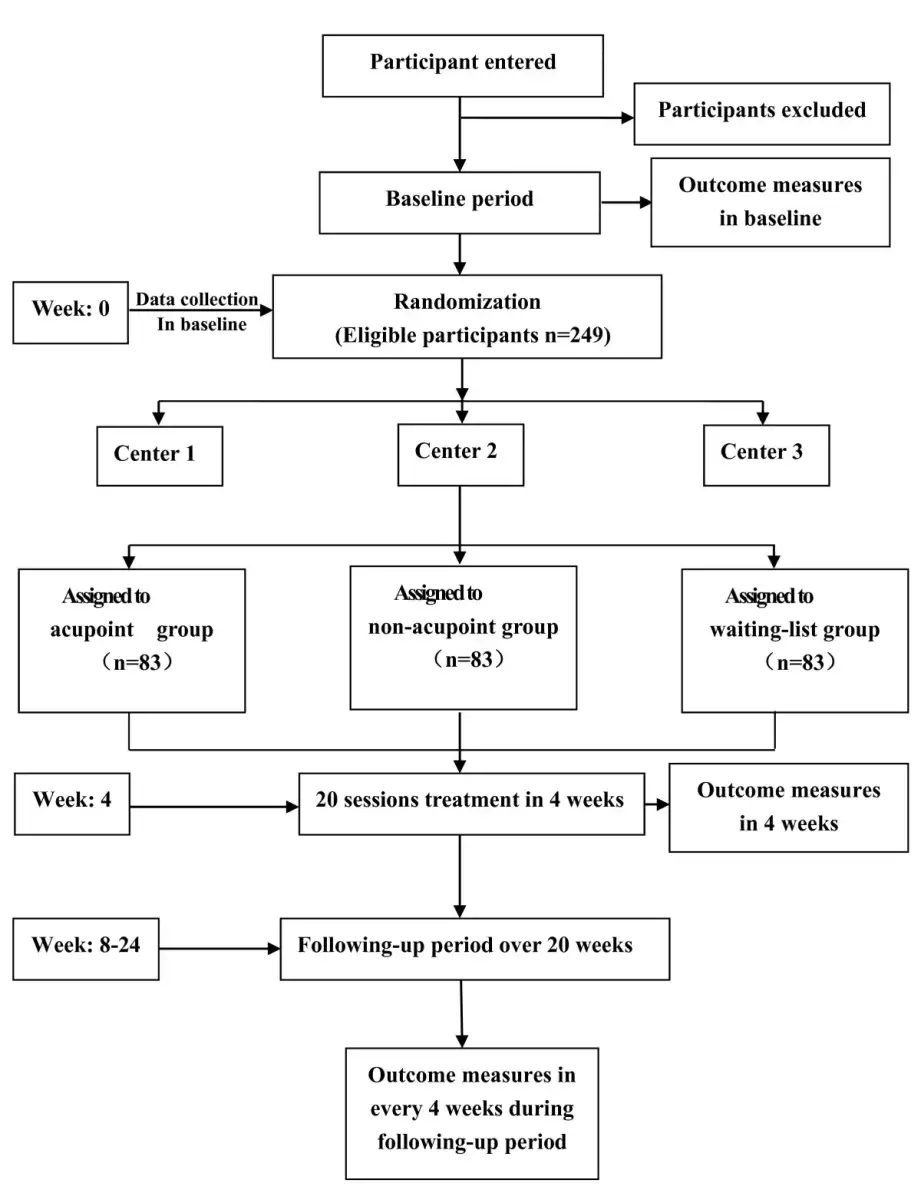
One study protocol from July 2022 planned to compare manual acupuncture with placebo acupuncture in 198 patients.
A 2017 trial compared true acupuncture (TA) to sham acupuncture (SA) and a waiting list (WL) control. It found that both TA and SA reduced the need for acute medication compared to the WL group. Notably, true acupuncture showed persistent benefits superior to sham acupuncture in reducing migraine frequency, days with migraine, and pain intensity over a 24-week period.
A 2005 study found that both acupuncture and sham acupuncture groups fared better than a waiting list group for most secondary outcomes. However, there were no significant differences between the acupuncture and sham acupuncture groups in that particular study, suggesting that specific point location might not have been the sole factor.
Brain Imaging Studies: Researchers are using advanced techniques like functional magnetic resonance imaging (fMRI) to understand how acupuncture affects the brain.
A study published in August 2022 found that after acupuncture, patients receiving real acupuncture showed enhanced connectivity in certain brain regions (right AMYG/MCC-left MTG and right MCC-right superior temporal gyrus) compared to those receiving sham acupuncture. The study also noted that baseline connectivity in the right AMYG-left MTG could predict how much monthly migraine days would be reduced. This study indicated significant improvements in headache severity and quality of life for the real acupuncture group.
Another study in May 2017 indicated that acupuncture could modulate abnormal brainstem activity in patients with migraine without aura.
A May 2021 study investigated the "Differential Modulating Effect of Acupuncture in Patients With Migraine Without Aura" using resting-state fMRI.
The evidence suggests that acupuncture may influence brain connectivity and activity in ways that correlate with clinical improvements in migraine symptoms.

Key Areas of Investigation
| Aspect of Acupuncture Research | Key Findings & Focus |
|---|---|
| Preventive Effects (Prophylaxis) | Reducing the frequency and intensity of migraine headaches. |
| Comparison Groups | Real acupuncture vs. sham acupuncture, waiting list, or standard pharmacological therapy. |
| Brain Mechanisms | Investigating changes in brain connectivity and activity using fMRI. |
| Dosage and Treatment Parameters | Determining optimal session frequency, duration, and total number of treatments. |
| Types of Migraine | Primarily focusing on migraine without aura (MWoA). |
| Adverse Events | Monitoring for side effects, which appear to be generally mild in available data. |
Expert Perspectives and Ongoing Research
While results show promise, the field continues to evolve. Researchers are actively working on refining study designs and exploring the neurological underpinnings of acupuncture's effects. Study protocols are underway to further investigate these mechanisms. For instance, a protocol published in September 2022 aims to use multimodal MRI and machine learning to understand the neurological mechanisms and predict treatment effects of acupuncture on migraine without aura.
Further research is essential to solidify these findings and establish definitive guidelines for acupuncture as a migraine treatment.
Conclusion and Future Directions
Current evidence indicates that acupuncture is a promising treatment option for migraine without aura, particularly for prophylaxis. Studies suggest that real acupuncture can lead to more significant reductions in migraine frequency and severity compared to sham acupuncture or no treatment. Brain imaging research is beginning to reveal the neurological pathways that acupuncture might influence.
Read More: FDA Approves Wegovy for Liver Disease with Scarring
Future research should continue to focus on:
Large-scale, well-designed RCTs to confirm efficacy.
Understanding the precise neurological mechanisms.
Establishing standardized treatment protocols, including optimal dosage and duration.
Comparing acupuncture directly with established medical therapies.
The overall sentiment from the data indicates that acupuncture holds potential as a complementary or alternative therapy for individuals managing migraine without aura.
Sources Used
Article 1 & 13: Acupuncture and Its Role in the Treatment of Migraine Headaches - PMC (https://pmc.ncbi.nlm.nih.gov/articles/PMC7606388/) & Neurology and Therapy (https://link.springer.com/article/10.1007/s40120-020-00216-1)
Context: These articles provide an overview of acupuncture's use in migraine treatment and prevention, citing its role as a relatively recent option.
Article 2: Changes in brain connectivity linked to multisensory processing of pain modulation in migraine with acupuncture treatment - ScienceDirect (https://www.sciencedirect.com/science/article/pii/S2213158222002339)
Context: This study investigates the neurological effects of acupuncture on brain connectivity in migraine patients using fMRI.
Article 3: Manual acupuncture as prophylaxis for migraine without aura: study protocol for a multi-center, randomized, single-blinded trial - Trials (https://link.springer.com/article/10.1186/s13063-022-06510-7)
Context: This is a protocol for a planned trial to test manual acupuncture for migraine prevention.
Article 4: Acupuncture for migraine: A systematic review and meta-regression of randomized controlled trials - ScienceDirect (https://www.sciencedirect.com/science/article/pii/S0965229924000645)
Context: This meta-analysis explores the relationship between acupuncture dosage and its effectiveness in reducing migraine attacks.
Article 5: The role of acupuncture in the treatment of migraine - PMC (https://pmc.ncbi.nlm.nih.gov/articles/PMC3291665/)
Context: Another overview of acupuncture's role in migraine management, referencing various trial designs.
Article 6: Acupuncture for migraine without aura: a systematic review and meta-analysis - PubMed (https://pubmed.ncbi.nlm.nih.gov/30007828/)
Context: This review systematically assesses the therapeutic and preventive effects and safety of acupuncture for migraine without aura.
Article 7: Long-term Effect of Acupuncture for Migraine Prophylaxis - JAMA Internal Medicine (https://jamanetwork.com/journals/jamainternalmedicine/fullarticle/2603492)
Context: This study evaluated the long-term effectiveness of acupuncture for preventing migraines, comparing true, sham, and no treatment.
Article 8: Acupuncture for Patients With Migraine - JAMA (https://jamanetwork.com/journals/jama/fullarticle/200822)
Context: An older study examining the effects of acupuncture and sham acupuncture compared to a waiting list in migraine patients.
Article 9: Neurological mechanism and treatment effects prediction of acupuncture on migraine without aura: Study protocol for a randomized controlled trial - PubMed (https://pubmed.ncbi.nlm.nih.gov/36158972/)
Context: This is a protocol for an RCT aiming to explore the neurological mechanisms of acupuncture for migraine using advanced MRI techniques.
Article 10: Evaluating the prophylaxis and long-term effectiveness of acupuncture for migraine without aura: study protocol for a randomized controlled trial - Trials (https://trialsjournal.biomedcentral.com/articles/10.1186/1745-6215-14-361)
Context: Protocol for a trial evaluating both immediate and long-term benefits of acupuncture for migraine prevention.
Article 11: Differential Modulating Effect of Acupuncture in Patients With Migraine Without Aura: A Resting Functional Magnetic Resonance Study - PubMed (https://pubmed.ncbi.nlm.nih.gov/34122321/)
Context: This study used resting-state fMRI to investigate how acupuncture affects brain activity in migraine patients.
Article 12: Efficacy of acupuncture-related therapy for migraine | JPR - Dovepress (https://www.dovepress.com/efficacy-of-acupuncture-related-therapy-for-migraine-a-systematic-revi-peer-reviewed-fulltext-article-JPR)
Context: A systematic review on the effectiveness of various acupuncture-related therapies for migraine.
Article 14: Acupuncture modulates the abnormal brainstem activity in migraine without aura patients - ScienceDirect (https://www.sciencedirect.com/science/article/pii/S2213158217301183)
Context: This research focuses on how acupuncture might alter brainstem activity in individuals with migraine without aura.
Article 15: Acupuncture for migraine: What to know - Medical News Today (https://www.medicalnewstoday.com/articles/acupuncture-for-migraines)
Context: A general overview article discussing acupuncture for migraines, referencing its comparison to other treatments.